The best things to sell online from home are the ones that fit your life: your budget, your space, your skills and the hours you actually have. A product that works for a mom with a craft room and a free afternoon every day can be a nightmare for a mom with a toddler and 30 minutes after bedtime.
So instead of a random list of “hot products,” we’ve broken down seven types of products you can sell from home, with honest pros and cons and how much effort each takes to start. At the end, we’ll show you how to choose the right one for you.
Best things to sell online from home: the quick answer
- Digital products: printables, planners, templates. Lowest startup effort.
- Print-on-demand: your designs on shirts, mugs and totes, printed and shipped for you.
- Personalized items: custom names, dates and photos on gifts.
- Handmade goods: candles, jewelry, crochet, soap and more.
- Curated and vintage: handpicked finds and gift boxes.
- Resale and thrift flips: buy low, clean up, sell for more.
- Wholesale products: buy in bulk from brands and resell in your own store.
1. Digital products
Printables, planners, checklists, budget sheets, kids’ activity pages, wall art, social media templates and simple guides. You design them once (Canva makes this easy), and the platform delivers the file automatically every time someone buys.
- Pros: very low cost to start, no inventory, no shipping, and you can sell the same product again and again.
- Cons: crowded market, low prices per item, and you need strong listings and mockups to stand out.
- Startup effort: low. A laptop, Canva and a few evenings are enough to make your first products.
- Best for: organized moms, teachers, designers, and anyone who wants zero shipping.
Want to try it? Read our guide on how to make printables to sell, or start with these easy digital products that need no tech or art skills.
2. Print-on-demand products
You create the design, and a print-on-demand company like Printful or Printify prints it on a product (t-shirts, sweatshirts, mugs, tote bags, posters, phone cases) only when a customer orders. They ship it straight to your buyer.
- Pros: no inventory, no upfront stock, and you never pack a box. It connects to Etsy, Shopify and other platforms.
- Cons: profit per item is lower because the supplier takes a big share, and you rely on their quality and shipping times.
- Startup effort: low to medium. You need designs, mockups and a few samples to check quality.
- Best for: moms with a sense of humor, a niche audience (teachers, nurses, dog lovers) or design skills.
Tip: always order a sample before you list a print-on-demand product. Photos of your own sample look more real than mockups, and you’ll catch quality problems before a customer does.
3. Personalized items
Custom name signs, birth announcements, wedding and party decor, teacher gifts, family shirts and engraved keepsakes. Personalization can be digital (an editable template), print-on-demand, or handmade.
- Pros: buyers often pay more for something made just for them, and it’s harder for big stores to compete.
- Cons: every order is a little different, so it takes more time per sale, and typos can mean remakes.
- Startup effort: low to medium, depending on whether you use templates, print-on-demand or your own equipment.
- Best for: detail-oriented moms who enjoy making gifts feel special.
4. Handmade goods
Candles, soap, jewelry, crochet and knitting, baby items, pottery, art prints and home decor. If you already have a craft you love, this is a natural fit.
- Pros: unique products, loyal customers, and the joy of making something with your hands.
- Cons: your income is limited by the hours you can make things, plus materials, storage and shipping. Some products (like cosmetics, candles and kids’ items) have safety or labeling rules.
- Startup effort: medium. You need materials, tools, packaging and good product photos.
- Best for: experienced crafters who have some dedicated space and time.
5. Curated and vintage items
Curating means picking and pairing products so buyers don’t have to: themed gift boxes, vintage dishes and clothing, book bundles, or self-care kits. On Etsy, vintage items must be at least 20 years old.
- Pros: your taste is the product, and one-of-a-kind items can sell quickly to the right buyer.
- Cons: sourcing takes time, every item needs its own photos and listing, and you’ll need storage.
- Startup effort: medium. You need a sourcing budget and space.
- Best for: moms with a good eye who already love antique stores and estate sales.
6. Resale and thrift flips
Buy items at thrift stores, garage sales or clearance racks, clean or fix them, and sell them for more. Brand-name kids’ clothing, home decor, furniture and collectibles are common choices.
- Pros: low cost per item, a fun treasure hunt, and you can start with things already in your house.
- Cons: lots of hands-on time (sourcing, cleaning, photographing, listing, shipping), and no two items are the same.
- Startup effort: low to medium. Start small and reinvest your profits.
- Best for: moms who enjoy hunting for deals and can get out to sales regularly.
Keep in mind that Etsy only allows reselling vintage items (20+ years old), craft supplies and curated gift sets, not general secondhand goods. Your own store or local selling through Facebook Marketplace gives you more freedom.
7. Wholesale products
You buy products in bulk from brands at wholesale prices, then sell them in your own online store at retail prices. Think boutique clothing, kids’ toys, home goods or gift items. Wholesale marketplaces like Faire make it easier for small shops to buy from independent brands.
- Pros: ready-made products with professional photos, and you can build a boutique around a theme.
- Cons: you pay for inventory before you sell it, you need storage, and you compete on brand and curation rather than on making something unique.
- Startup effort: medium to high, because of the upfront inventory cost.
- Best for: moms who love retail and want to run a boutique-style store.
For sourcing ideas and how to avoid shady suppliers, see our guide on where to buy products to sell online.
Comparing the options at a glance
- Lowest cost to start: digital products, then print-on-demand.
- Least hands-on time per sale: digital products and print-on-demand.
- Highest price per item: personalized, handmade and vintage.
- Most space needed: wholesale, resale and handmade.
- Easiest with small kids at home: digital products and print-on-demand.
How to choose what to sell online from home
Ask yourself these five questions, and be honest:
- How much time do I really have? Count the hours you can protect each week, not the hours you hope for.
- How much can I spend to start? If the answer is “almost nothing,” start with digital or print-on-demand.
- Do I have space? No spare room means you’ll want products that don’t need storage.
- What do I enjoy? You’ll make or list the same products many times. Pick something you won’t get sick of.
- Who will buy it? Pick a specific customer you understand, like new moms, teachers or homeschool families.
Then test before you go all in. List a few products, share them, and watch what gets views and sales. Double down on what works and drop what doesn’t.
Do it with AI: open Claude (or ChatGPT) and paste: “Help me choose what to sell online from home. I have [HOURS] hours a week, a startup budget of [AMOUNT], [SPACE YOU HAVE], and I’m good at [SKILLS]. My ideal customer is [CUSTOMER]. Compare digital products, print-on-demand, personalized items, handmade, vintage, resale and wholesale for my situation. Rank the top 3 with reasons, then give me 5 specific first products for my top pick.” Then check the ideas against real searches on Etsy and Pinterest and edit to fit you.
Where should you sell?
Once you know what to sell, you need a place to sell it. Etsy is great for digital, handmade, vintage and print-on-demand products because it already has shoppers. Your own store on Shopify or Bonidi (the all-in-one system we use, bonidi.com) works for any legal product and lets you build your own brand and email list. Many sellers use both.
Our step-by-step guide on how to start an online store from home walks you through setting up, pricing and launching.
Do it with AI: once you’ve picked a product, try: “Write a product description for my [PRODUCT] for [CUSTOMER]. Include what it is, who it’s for, what’s included, sizes or formats, and one sentence on why it makes life easier. Keep it warm, clear and under 150 words.” Then edit it so every detail is accurate and it sounds like you.
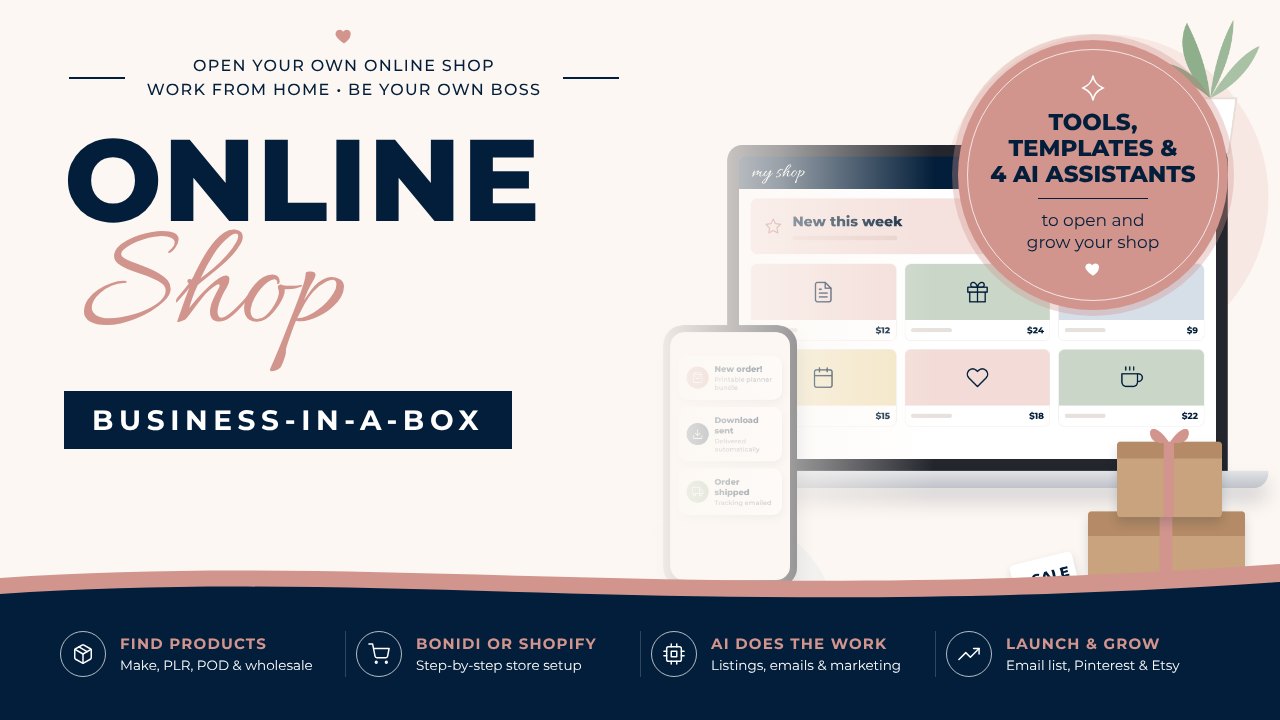
Turn the right product into a real online shop
Online Shop Business-in-a-Box shows you how to pick products, set up your store in Bonidi or Shopify, sell on Etsy too, and launch, with templates and AI assistants for every step.
Selling online from home FAQ
What is the easiest thing to sell online from home?
Digital products like printables and templates are usually the easiest, because there’s no inventory, shipping or packing. Print-on-demand is the easiest physical option.
What sells best online right now?
Trends change quickly, but gifts, personalized items, home organization, kids’ activities and seasonal products sell well year after year. Check what’s popular on Etsy and Pinterest in your niche, and look for gaps you can fill.
Can I sell online with no money?
You can start with very little. Digital products and print-on-demand need almost no upfront inventory. You’ll still have some platform fees, so check current pricing before you start.
Do I need a license to sell products from home?
It depends on where you live and what you sell. Some areas require a business license, and some products (like food, cosmetics and children’s items) have extra rules. Check your local requirements or talk to a professional.
Is it better to make products or resell them?
Making products gives you something unique but takes more time per sale. Reselling saves making time but needs upfront money and space. Many sellers start with one and add the other later.
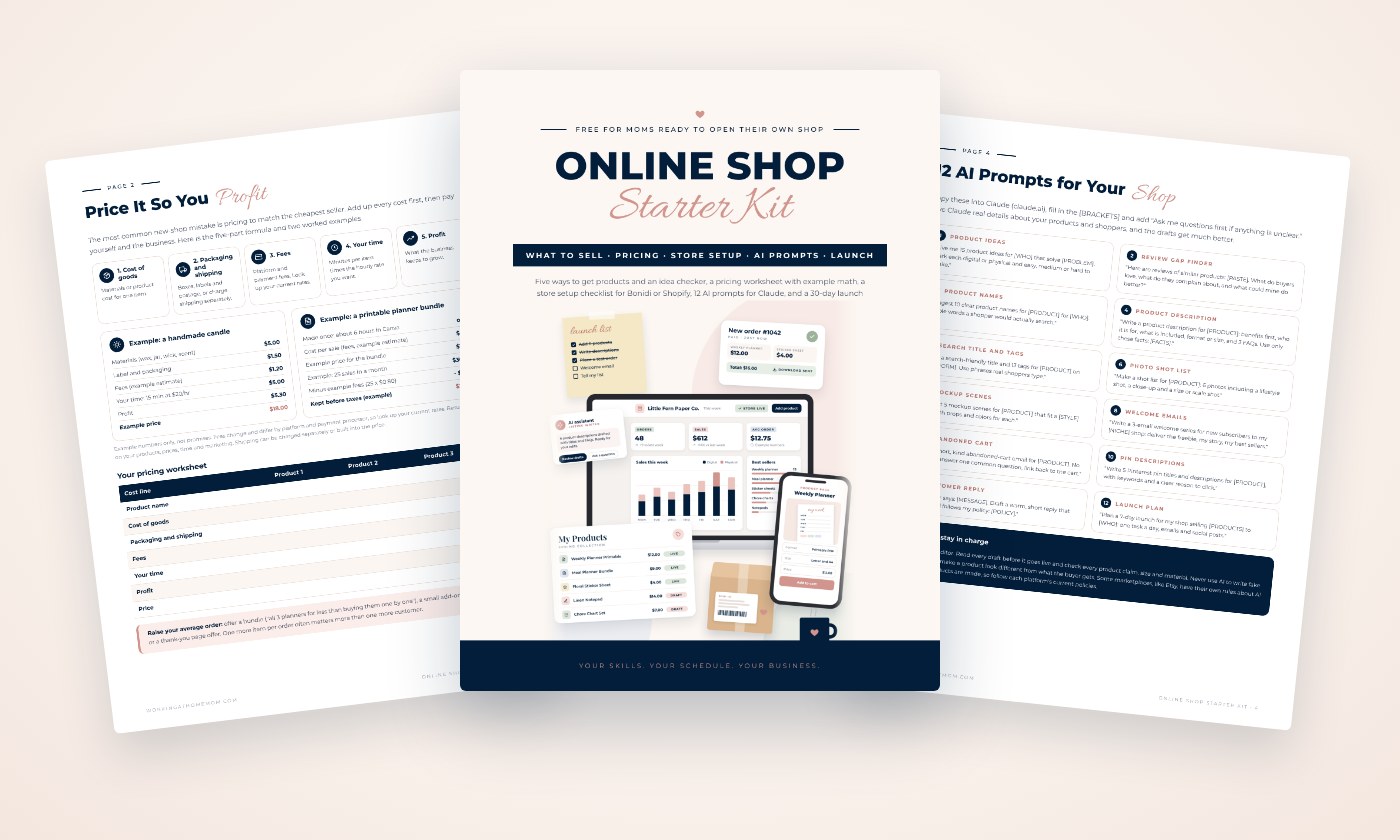
Plan, price and launch your shop
Five ways to get products, a pricing worksheet with example math, a store setup checklist for Bonidi or Shopify, 12 AI prompts and a 30-day launch plan. Sent straight to your inbox.