If you’re wondering how to become a freelance writer with no experience, here’s the honest version: it’s very doable from home, but it isn’t the “write a few blog posts and make easy money” job some ads promise. Businesses still pay writers in 2026. They just pay for writers who know a topic, think clearly and can turn a messy draft into something useful.
The good news is that much of what clients value comes from life experience you already have. Parenting, a past career, a hobby you’ve gone deep on, a health journey you’ve researched for years: all of these can become a writing niche.
This guide covers what the job really looks like, realistic beginner pay, how to make samples, where to find clients, how to pitch and how to get paid safely.
How to become a freelance writer: the quick answer
- Pick one niche you know well and one type of writing (blog posts, emails or website pages).
- Write 3 strong samples and publish them somewhere you can link to.
- Set a simple starting rate, for example $50 to $100 per 1,000 words for blog posts.
- Pitch 5 to 10 businesses a week through your network, job boards and direct outreach.
- Use a short written agreement and get a deposit before you start.
- Use AI as a helper for outlines and editing, never as a replacement for your own knowledge.
What a freelance writer actually does
Most freelance writing for beginners is business writing, not novels or magazine features. Common projects include:
- Blog posts and articles: helpful content for a company’s website, usually 800 to 2,000 words.
- Email newsletters: weekly or monthly emails for small businesses, coaches and shops.
- Website pages: about pages, service pages and FAQ pages.
- Product descriptions: short, clear copy for online stores.
- Editing and refreshing: updating old blog posts or polishing drafts (including AI drafts) so they’re accurate and sound human.
A realistic day
Say you have two regular clients. Your morning might be a focused hour after school drop-off researching a blog post and writing the outline. During nap time you draft. In the evening you answer two emails, send an invoice and make edits a client requested. Writing is easy to fit into small windows for research and outlining, but drafting needs at least one uninterrupted block a day.
Who freelance writing suits (and who it doesn’t)
- It suits you if: you like explaining things, you enjoy research, you can take edits without taking them personally and you’re comfortable reaching out to strangers to find work.
- It may not suit you if: you need steady paychecks right away, you dislike self-promotion or you can’t find any quiet time to think. A scheduled remote job might be a better first step.
The AI-era reality for freelance writers
AI tools can produce a passable generic article in seconds, so clients no longer pay much for generic. What they still pay for:
- Real expertise: a writer who knows the topic and can add examples, nuance and correct details.
- Editing judgment: turning an AI draft or a subject expert’s notes into something clear, accurate and on brand.
- Fact-checking: catching claims that are wrong, outdated or unsupported.
- Voice: writing that sounds like the business, not like every other website.
Many clients now have rules about AI. Some ban it, some allow it for research, some expect you to edit AI drafts. Always ask, and never pass off unedited AI text as your own work.
Want a writing niche? Read how to become a resume writer or a grant writer.
Step 1: Pick your niche
A niche makes you easier to hire. “I write about home organizing and family routines for small product brands” lands better than “I can write about anything.”
List what you know from work, hobbies and life. Then circle topics where businesses sell something and publish content. Good starter niches often include parenting products, home and garden, personal finance basics, health and wellness (with care around medical claims), education, pets, food and small business software.
Tip: your past job counts. A former nurse, teacher, bank teller, paralegal or retail manager has insider knowledge that generic writers don’t.
Step 2: Write samples (before anyone hires you)
You don’t need clients to have a portfolio. You need 3 pieces that show what you’d write for a client:
- One helpful blog post in your niche, around 1,000 words, with clear headings.
- One short piece that shows range, like a sales email, a newsletter or 3 product descriptions.
- One “before and after” edit: a rough draft (your own, or an AI draft you generated) next to your improved version.
Publish them somewhere you can link to: a free portfolio site, a simple Google Doc folder set to “view only,” or LinkedIn articles. If you guest post for a blog in your niche, that’s a published sample with a real byline.
Freelance writer pay: honest numbers
Rates vary widely by niche, skill, client and location. Beginners usually start low, and that’s normal. As a conservative starting point, many beginner blog writers charge around $50 to $100 per 1,000 words. Writers with a specialty, proven results and repeat clients charge more over time.
Example: a small business wants 4 blog posts a month at about 1,000 words each. At $60 per post, that’s $240 a month from one client. Two or three clients like that is meaningful part-time income for many families, but it takes time to build, and some months will be slower. This is example math, not a promise.
Price per piece or per project rather than per hour when you’re starting, so you’re not penalized for being slower while you learn. Track your time anyway, so you know which projects are worth it.
Skills and equipment you need
- Clear writing: short sentences, logical structure and correct grammar.
- Research skills: finding reliable sources and citing them when the client asks.
- Basic SEO awareness: using a main search phrase naturally, writing helpful headings and answering real questions.
- Client communication: confirming details, meeting deadlines and handling feedback calmly.
- Equipment: a reliable computer, internet, Google Docs or Word, and a calendar or Trello board to track deadlines. That’s it.
How to get your first freelance writing client
- Tell your network. Post on Facebook and LinkedIn that you’re taking on writing clients in your niche, and ask friends who own businesses.
- Update your LinkedIn headline to say what you write and for whom, for example “Blog writer for pet brands.”
- Pitch 5 to 10 businesses a week whose blogs or newsletters are outdated or inactive (script below).
- Apply to a few job board posts each week, tailoring each application.
- Offer a small first project, like one blog post, so the client can try you with low risk.
- Ask for a testimonial and permission to use the piece as a sample once it’s published.
A simple pitch script
“Hi [NAME], I’m a freelance writer who works with [TYPE OF BUSINESS]. I noticed your blog hasn’t been updated since [MONTH], and your customers are probably searching for things like [TOPIC IDEA 1] and [TOPIC IDEA 2]. I’d love to write a post on one of those for you. Here’s a sample of my work: [LINK]. Would a short call or email chat this week be helpful?”
Keep it short, specific to them and about their customers, not about you needing work.
Where to find legit freelance writing work
- Your network and local businesses: often the fastest first client, and the least competitive.
- LinkedIn: search posts for “looking for a writer” or “freelance writer,” and connect with marketing managers in your niche.
- Freelance marketplaces: Upwork and Fiverr have writing categories. Competition is heavy, so a narrow niche and strong samples matter.
- Job boards: Indeed, FlexJobs and writing-focused boards such as the ProBlogger job board list contract and part-time writing roles. Read every listing carefully.
- Marketing agencies: small agencies sometimes keep a bench of freelance writers. Send a short email with your niche and samples.
- Content platforms: some sites match writers with clients. Policies and pay change often, so check recent reviews from writers before you sign up.
Contracts and getting paid
Even a one-page agreement protects you. Include the scope (topics, word counts, number of revisions), deadline, price, payment terms, who owns the work after payment and the client’s AI policy.
- Get a deposit: ask for 50% upfront on first projects, or full payment upfront for single pieces.
- Invoice clearly: use simple invoicing software or a PayPal or Stripe invoice with a due date.
- Limit revisions: one or two rounds is common. Extra rounds or new directions cost extra.
- Keep records: as a freelancer you handle your own taxes. Set money aside and check your local rules or talk to a tax professional.
Freelance writing scams and red flags
- Paying to apply or paying for “required” software or training before you’re hired.
- Huge unpaid “test” articles: a short paid test or a paragraph is fair. A full free article is not.
- Overpayment checks: a “client” sends too much money and asks you to refund the difference.
- Moving to messaging apps immediately with vague details and pressure to start today.
- Write-for-exposure offers from businesses that clearly have a marketing budget.
- Academic ghostwriting: writing students’ essays or assignments for them is cheating, and it’s work to avoid.
Do it with AI: paste this into Claude or ChatGPT: “I’m a beginner freelance writer in the [NICHE] niche. My background is [YOUR EXPERIENCE]. Suggest 10 blog post topics that a [TYPE OF BUSINESS] would want for their customers. For the best 3, write a detailed outline with H2 headings, the main question each section answers and where I should add my own examples or expertise. Do not write the full article.” Then check the outline, cut anything generic, write the draft yourself and fact-check every claim before you send it.
Your first-week plan
- Day 1: choose your niche and the one type of writing you’ll offer first.
- Day 2: write your first sample blog post.
- Day 3: write your short sample and your before-and-after edit.
- Day 4: set up your portfolio links and update your LinkedIn headline.
- Day 5: make a list of 20 businesses in your niche with outdated blogs or newsletters.
- Day 6: send 5 personalized pitches and tell your network you’re open for work.
- Day 7: create a simple agreement template and set your starting price.
Grow your writing into more services
Once you have a few clients, related skills can raise your income. Editing is a natural fit, and our guide on how to work at home as a proofreader or editor explains that side. Many writers also add email management and content scheduling, which is classic virtual assistant work. If you’re still comparing options, see our list of work-from-home jobs for moms with no experience.
Another natural step up is copywriting for sales funnels: landing pages, email sequences and offers. It pays better than blog writing once you understand how people decide to buy.
Turn your writing skills into funnel building
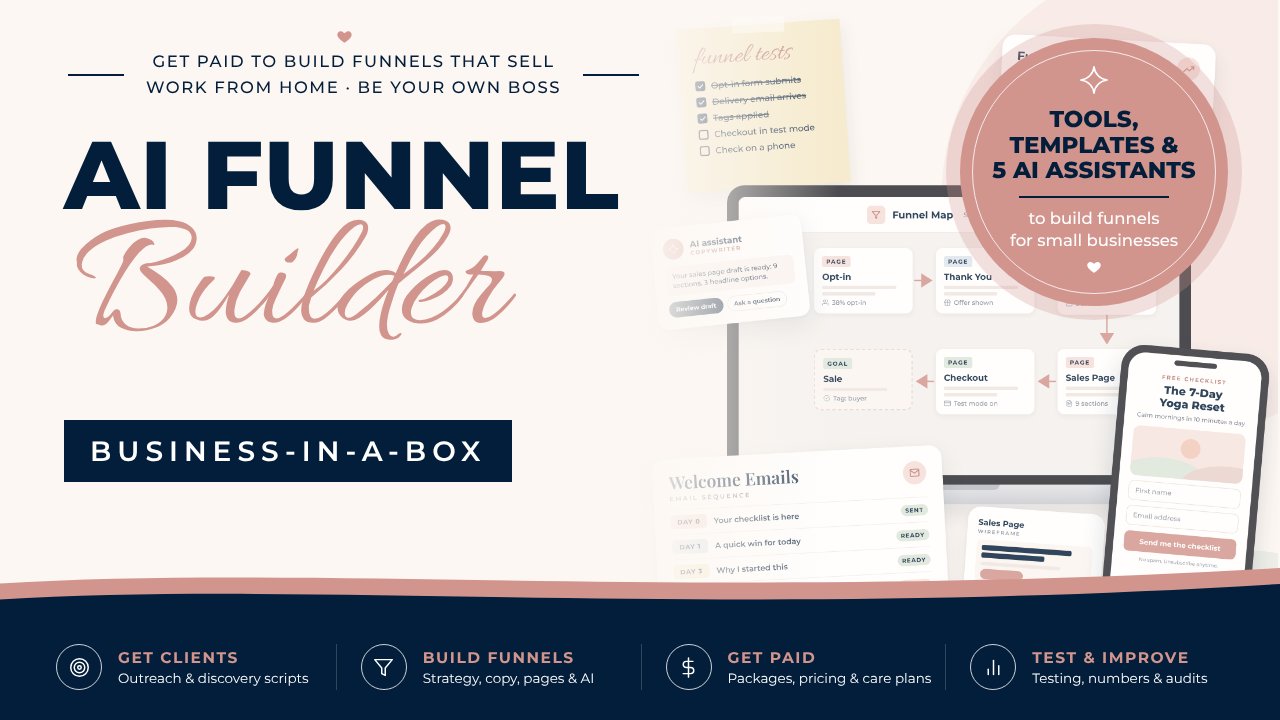
Funnel copy and email sequences are a natural next step for writers. Our AI Funnel Builder Business-in-a-Box shows you how to build sales funnels for small businesses with AI helping on the copy and emails, with 12 modules, 18 templates and 5 AI assistants. It’s self-paced.
Freelance writing FAQ
Can I become a freelance writer with no experience?
Yes. Clients care about samples and reliability more than a degree. Write 3 strong samples in one niche, start with small projects and collect testimonials as you go.
How much do beginner freelance writers make?
Rates vary widely. A conservative starting point for beginner blog writing is around $50 to $100 per 1,000 words. Income depends on how many regular clients you have, and building that takes time.
Is freelance writing still worth it with AI?
It can be, but the job has shifted. Clients pay for expertise, accuracy, editing and voice. Writers who know a niche and use AI carefully as a helper are in a stronger position than those writing generic content.
Do I need a website to be a freelance writer?
Not at first. A simple portfolio page, a shared folder of samples or LinkedIn articles is enough to start pitching. A website helps later once you know your niche.
What should I write about as a beginner?
Write about what you already know from work, parenting, hobbies or life experience, in a niche where businesses publish content. Your real knowledge is what makes your writing worth paying for.
Ready to write copy that sells?
Get our free AI Funnel Starter Kit with simple, ready-to-use resources to help you get started.