If you’re the friend everyone texts for help with fractions, essays or SAT words, you may be able to become an online tutor. Tutoring is one of the few work-from-home jobs that uses what you already know, needs very little equipment and can fit into school-day or evening hours.
It’s also more competitive than social media makes it look. Platforms test you, parents read reviews and the after-school hours most families want are the same hours your own kids need you. This guide gives you the honest version: subjects, platforms, pay, background checks and a realistic plan for your first students.
How to become an online tutor: the quick answer
- Pick 1 or 2 subjects and grade levels you can teach confidently.
- Get your setup ready: a laptop, webcam, headset, steady internet and a quiet corner.
- Apply to 2 or 3 tutoring platforms and pass their subject tests and background checks.
- Write a clear profile and record a short intro video.
- Build reviews on platforms, then add your own private students through referrals.
- Block your tutoring hours around your family’s schedule and protect them.
What an online tutor does (and a realistic day)
An online tutor helps students one-on-one or in small groups over video. You might explain a math concept, review an essay, quiz a student before a test or help a homeschooler work through a curriculum. Many sessions use a shared whiteboard, a shared document or the platform’s own classroom tool.
A realistic day for a tutoring mom might look like this:
- Morning: answer parent messages, prep a worksheet or practice questions for the afternoon.
- Midday: one or two sessions with homeschoolers, adult learners or students in other time zones.
- After school (roughly 3:30 to 7 p.m.): the busiest window, when most K to 12 families book.
- Evening: jot a quick note on each session, then you are done for the day.
The real work is a mix of teaching, planning and communicating with parents. Plan on some unpaid prep time for every hour you tutor, especially at the start.
Who online tutoring suits (and who it doesn’t)
It’s a good fit if you
- Know a subject well: math, reading, writing, science, a language, test prep or a skill like coding or music theory.
- Explain things patiently: you can say the same thing three different ways without getting frustrated.
- Can protect an hour at a time: sessions need your full attention, with no kids interrupting on camera.
It may not suit you if you
- Need every after-school hour for your own kids: that’s peak tutoring time. Homeschoolers, adult learners and weekend students are options, but there are fewer of them.
- Want totally passive, flexible work: students book specific times and expect you to show up every week.
- Dislike talking to parents: updates, scheduling and the occasional tough conversation come with the job.
Choosing your subjects
The easiest way to start is to tutor what you could teach tomorrow with very little review. Good starting points:
- Elementary reading and math: high demand from parents, and patience matters more than advanced credentials.
- Middle and high school math: algebra and geometry are always in demand. Brush up before you take a platform’s subject test.
- Writing and essays: school essays, college application essays (coach, never write them) and adult writing skills.
- Test prep: SAT, ACT and other exams, if you know the test well.
- A professional skill: Excel, bookkeeping basics, coding or a second language for adults.
Tip: a narrow focus gets booked faster than “I tutor everything.” “Patient math tutor for grades 4 to 8” is easier for a parent to say yes to.
Honest pay: what online tutors really earn
Rates vary widely by subject, platform, experience and location. Here’s a conservative picture for 2026:
- Tutoring platforms: new tutors commonly start somewhere around $15 to $25 an hour. Platforms take a share or set the rate themselves, and you’re usually not paid for prep time or no-shows.
- Marketplaces where you set your rate: you can charge more, but new profiles with no reviews often need to start low to get booked.
- Private students: once you have experience and referrals, you keep the whole fee, but you handle scheduling, payments and finding students.
Example: say you tutor 8 sessions a week on a platform at $18 an hour. That’s about $144 a week before taxes, or roughly $575 a month. Add prep time and the real hourly rate is lower. This is example math, not a promise, and many tutors take a few months to fill their schedule.
Most platforms treat tutors as independent contractors, so taxes usually aren’t withheld. Keep good records and check your local rules or talk to a tax professional.
Skills and equipment you need
- Computer: a laptop or desktop. Many platforms don’t support tablets or phones for teaching.
- Webcam and headset: a headset with a microphone cuts echo and background noise.
- Reliable internet: a dropped call in the middle of a lesson hurts reviews. Test your speed and sit close to the router or use a cable.
- Quiet, tidy background: good lighting in front of you, not behind you.
- Tools: comfort with video calls, screen sharing, Google Docs and a digital whiteboard.
- Soft skills: patience, clear explanations, encouragement and reliable follow-through.
Background checks and requirements
Because you’ll often work with children, expect a background check. Most well-known platforms run one before you can tutor, and many also give a subject test or ask for proof of education. Requirements differ: some want a college degree or current enrollment, others care more about test scores and teaching ability. Read each platform’s current tutor requirements before applying.
If you take private students, parents may ask about your background too. Being upfront and having references ready builds trust.
Step by step: how to get your first students
- Choose your niche: subject, grade levels and session length (often 30 or 60 minutes).
- Apply to 2 or 3 platforms at once: approvals can take days or weeks, and some platforms pause applications for popular subjects.
- Prepare for subject tests: review the content for an evening or two, because tests can be timed.
- Write a specific profile: who you help, how you teach and what a first session looks like. Skip vague lines like “I love learning.”
- Record a short intro video: one to two minutes, smiling, in good light, explaining how you help.
- Open your best hours: new tutors get booked faster with a few in-demand time slots.
- Over-deliver for the first students: show up early, send a short recap to parents and ask happy families for a review.
- Add private students: tell friends, your kids’ school community and local homeschool groups what you offer. Follow each platform’s rules about moving students off the platform; many forbid it.
A simple message for your network
“Hi friends, I’m now tutoring [SUBJECT] online for [GRADES]. Sessions are [LENGTH] over video, and I focus on [WHAT YOU DO, for example building confidence before tests]. I have openings on [DAYS AND TIMES]. If you know a family who could use help, I’d love a referral.”
Where to find legit online tutoring work
Platforms change their requirements and hiring often, so check each official site and recent tutor reviews before applying.
- Wyzant: a marketplace where you set your own rate and students choose you. Tutors are vetted, including a background check.
- Varsity Tutors: matches tutors with students and uses subject assessments and background checks.
- Tutor.com: on-demand and scheduled tutoring, typically with stricter education requirements and a background check.
- Preply: best known for languages, but also covers academic subjects. You set your rate.
- Outschool: you teach your own live classes to kids, often small groups, after an application and background check.
- Local schools, libraries and homeschool co-ops: some hire or refer online tutors directly.
- Job boards: search Indeed and FlexJobs for “online tutor” plus your subject.
For other beginner-friendly roles to compare, see our list of work-from-home jobs for moms with no experience.
Tutoring scams and red flags
- Paying to get hired: skip any “tutoring company” that charges a placement or registration fee before you get students.
- Overpayment scams: a “parent” sends more than your fee and asks you to refund the difference. The original payment later bounces.
- Offers by text or messaging app: a stranger offering a high-paying tutoring gig with no interview is a warning sign.
- Requests for sensitive details too early: don’t share your Social Security number or bank details until you’ve verified the company and have a written agreement.
- Uncomfortable requests: keep all communication with minors professional and visible to parents. Never agree to private chats with a child outside the lesson platform.
Do it with AI: paste this into Claude or ChatGPT: “I’m an online tutor for [SUBJECT] with a student in [GRADE] who is struggling with [TOPIC]. Create a 45-minute lesson plan with a 5-minute warm-up, a simple explanation in kid-friendly language, 3 worked examples, 6 practice problems that get gradually harder (with answers) and a 2-minute exit question. Then write a 3-sentence recap message for the parent.” Then check every answer and example yourself, because AI makes math and fact errors, and adjust the plan to your student.
Scheduling tutoring around your kids
- Set fixed tutoring blocks: for example, Tuesday and Thursday 4 to 7 p.m. when a partner or sitter is home.
- Use non-peak students: homeschoolers and adult learners often book mornings and midday.
- Prep in batches: plan the week’s lessons during nap time or one quiet evening.
- Have a kid plan: a special “tutoring time” activity box or show helps younger kids stay busy.
- Set a cancellation policy: for private students, decide how much notice you need and stick to it.
Our time management techniques for work-at-home moms can help you protect those blocks.
Your first-week plan
- Day 1: choose your subjects and grade levels, and check your equipment and internet.
- Day 2: read the tutor requirements for 3 platforms and start applications.
- Day 3: review content for subject tests and take them in a quiet space.
- Day 4: write your profile and record your intro video.
- Day 5: create a reusable first-session plan and a parent recap template.
- Day 6: send your network message and post in a local parent or homeschool group (if allowed).
- Day 7: set your weekly tutoring blocks and a simple income and hours tracker.
Grow beyond live sessions
Many tutors find they keep making the same worksheets, study guides and practice packs. Those can become printable products you sell, which earn without you being on camera. Our guide on how to make printables to sell shows how to start.
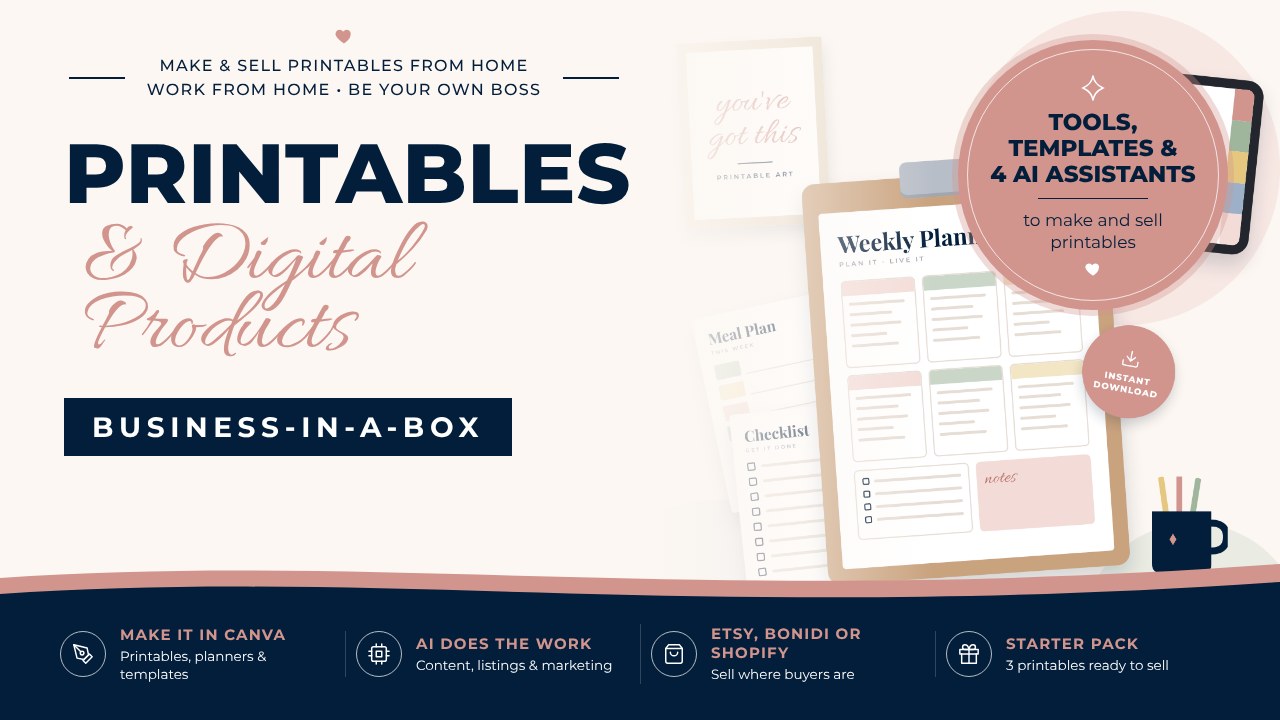
Turn your tutoring materials into products
Our Printables & Digital Products Business-in-a-Box shows you how to make worksheets, planners and printables in Canva with AI and PLR, then sell them. 12 modules, 20 templates, 4 AI assistants and a starter pack.
Online tutoring FAQ
Do I need a teaching degree to become an online tutor?
Usually not. Many platforms accept tutors without a teaching degree if you pass their subject tests and background check, though some require a college degree or current enrollment. Check each platform’s current requirements.
How much do online tutors make as beginners?
Rates vary by subject, platform and experience. New tutors on platforms commonly start around $15 to $25 an hour, and prep time is usually unpaid. Private students can pay more once you have experience and referrals.
Can I tutor online with no experience?
Yes, if you know your subject well. Helping your own kids, volunteering or coaching counts as relevant experience. A clear profile, a friendly intro video and a few early reviews help a lot.
What are the best hours for online tutoring?
Weekday afternoons and early evenings are busiest for K to 12 students. Homeschoolers, college students and adult learners often book mornings, midday or weekends.
Is online tutoring safe?
It can be, when you use reputable platforms, keep communication with minors professional and visible to parents, and never pay to get hired or refund an overpayment.
Start your first printable from your lessons
Get our free Printable Business Starter Kit with simple, ready-to-use ideas to help you get started.