Opening an Etsy shop takes an afternoon. Figuring out how to make money on Etsy takes a plan. Plenty of shops sit with a handful of listings and no sales, while others grow into a steady monthly income. The difference usually isn’t luck or talent. It’s a clear niche, the right products, smart pricing and a steady stream of shoppers.
This guide is the earning strategy. If you haven’t opened your shop yet, start with our Etsy shop setup guide, then come back here. We’ll walk through each part of the plan, show example math for a monthly income goal, and finish with a 90-day action plan.
How to make money on Etsy: the quick answer
- Pick a niche: one clear buyer with one clear need.
- Choose products with good margins: digital products are the easiest start.
- Price for profit: know your profit per sale after fees and costs.
- Build 30 or more strong listings: searchable titles, tags and photos.
- Drive traffic: Etsy search plus Pinterest, and later Etsy Ads.
- Win repeat buyers: bundles, coupons and great service.
- Set a monthly goal and work backward to the sales and visits you need.
Step 1: Pick a niche you can own
“Printables” isn’t a niche. “Printables for homeschool moms of toddlers” is. A niche makes everything easier: you know what to make next, which words buyers search, and how to write listings that speak to them.
A good niche has three things:
- A buyer you understand: moms, teachers, brides, small business owners, crafters.
- Proven demand: when you search Etsy, you see listings with reviews, which tells you people buy.
- Room for you: a gap you can fill better, like a simpler design, a more specific use, or a better bundle.
Step 2: Choose products that leave you money
Your product type decides how much of each sale you keep and how much work each order takes.
- Digital products: printables, planners and templates have no material or shipping cost, and Etsy delivers them automatically. Our list of the best digital products to sell on Etsy has 15 ideas.
- Handmade items: great margins on materials, but your output is limited by your hours.
- Print on demand: no inventory, but thinner margins per sale.
- Vintage: items at least 20 years old can sell well, but each one is a one-off.
Whatever you choose, it must fit Etsy’s Creativity Standards: made, designed, handpicked or sourced by you. If you use AI to help create a design, Etsy requires you to disclose it in the listing description. Etsy also doesn’t allow AI-generated patterns, recipes or how-to guides, and physical items need at least one unedited photo of the real item.
Don’t want to keep inventory? Read our honest guide to print-on-demand.
Step 3: Price for profit, not for a quick sale
Many beginners price low, hoping to get sales, then realize they’re barely making anything after fees. Etsy charges listing, transaction and payment processing fees, so check Etsy’s current fees page and build them into every price.
Work out your profit per sale: price minus materials, packaging, any shipping you pay, and fees. Then compare your price with similar listings. If yours includes more or looks more polished, you can charge more. Bundles are the easiest way to raise your average order without much extra work.
Tip: have a “ladder” of prices in your shop: a small, low-priced item that’s an easy first purchase, a mid-priced main product, and a bigger bundle. Buyers who start small often come back for more.
Step 4: Build listings that get found and clicked
Your listings are your salespeople. Each one should be easy to find in search and easy to say yes to.
- Titles: lead with the phrase buyers actually type, then add related phrases.
- Tags: use all 13, with multi-word phrases.
- Photos: a bright, clear first photo that reads well on a phone, then details, sizes and the item in use.
- Descriptions: what it is, who it’s for, what’s included and how it works.
- Volume: aim for 30 or more listings over your first few months. Every listing is another door into your shop.
Selling printables? Our step-by-step guide on how to sell printables on Etsy covers files, mockups and digital listings in detail.
Do it with AI: open Claude (or ChatGPT) and paste: “I sell [PRODUCT TYPE] on Etsy for [NICHE BUYER]. Here are my current listing title and tags: [PASTE]. Suggest a stronger title that starts with what buyers search, 13 tags of 20 characters or fewer, 5 new product ideas that fit my niche, and one bundle I could create from my existing products.” Then check every suggestion against real Etsy searches and edit it so it’s accurate and sounds like you.
Step 5: Bring shoppers to your shop
Etsy search is your main source of traffic, but it takes a few weeks for new listings to find their footing. Add these on top:
- Pinterest: create two or three pins for each listing. Pins can bring visitors for months.
- Your own social media: share new products, behind-the-scenes and how buyers use them.
- Etsy Ads: once you have listings that convert, a small, carefully watched ad budget can help them get seen. Check Etsy’s current ad settings and start small.
- Shop stats: look at which search terms bring visitors and which listings get views but no sales, then improve those listings first.
Step 6: Turn buyers into repeat buyers
Getting a new customer is hard work. Selling to someone who already loves your shop is much easier.
- Great service: fast, friendly replies and a thank-you note build loyalty and good reviews.
- Coupons and sales: Etsy lets you create coupon codes and sales. Include a thank-you coupon for the next order.
- Series and collections: if a buyer loves your January planner, make sure February is ready.
- Your own list, the right way: Etsy doesn’t allow you to add buyers to a marketing email list. Instead, offer a freebie on your own website so shoppers can sign up themselves.
Example: working backward from a monthly income goal
Here’s where a plan beats hoping. Pick a monthly profit goal, then work out the orders and shop visits you need. These numbers are hypothetical examples to show the math.
Example goal: $1,000 a month
- Say your average order is $15 and, after fees, you keep about $12 (a digital shop has no material costs).
- $1,000 / $12 = about 84 orders a month, or roughly 3 a day.
- If about 2 out of every 100 visitors buy (a 2% conversion rate, as an example), you need about 4,200 visits a month.
- Spread over 60 listings, that’s about 70 visits per listing each month.
Example goal: $3,000 a month
- Add bundles so your average order rises to $22 and you keep about $18.
- $3,000 / $18 = about 167 orders a month, or 5 to 6 a day.
- If better photos and listings lift conversion to 2.5%, you need about 6,700 visits a month.
- If one in four orders comes from repeat buyers, you only need to win about 125 new customers a month.
Notice how much the goal depends on three levers: average order value, conversion rate and traffic. You don’t have to fix everything at once. Raising your average order with bundles often helps fastest. Results depend on your time, skills and effort, but a goal you can break down is one you can actually work toward.
Your 90-day Etsy plan
- Month 1: choose your niche, design your first 15 listings, set up your shop policies and brand, and start pinning every listing.
- Month 2: add 15 to 20 more listings, create your first bundle, and refresh titles and photos on listings with views but no sales.
- Month 3: set up a thank-you coupon, plan your next seasonal products, test a small Etsy Ads budget on your best sellers, and set your monthly goal using the math above.
Once your Etsy shop is working, many sellers add their own store so they own their customer list. Our Etsy vs Shopify guide explains when that makes sense.
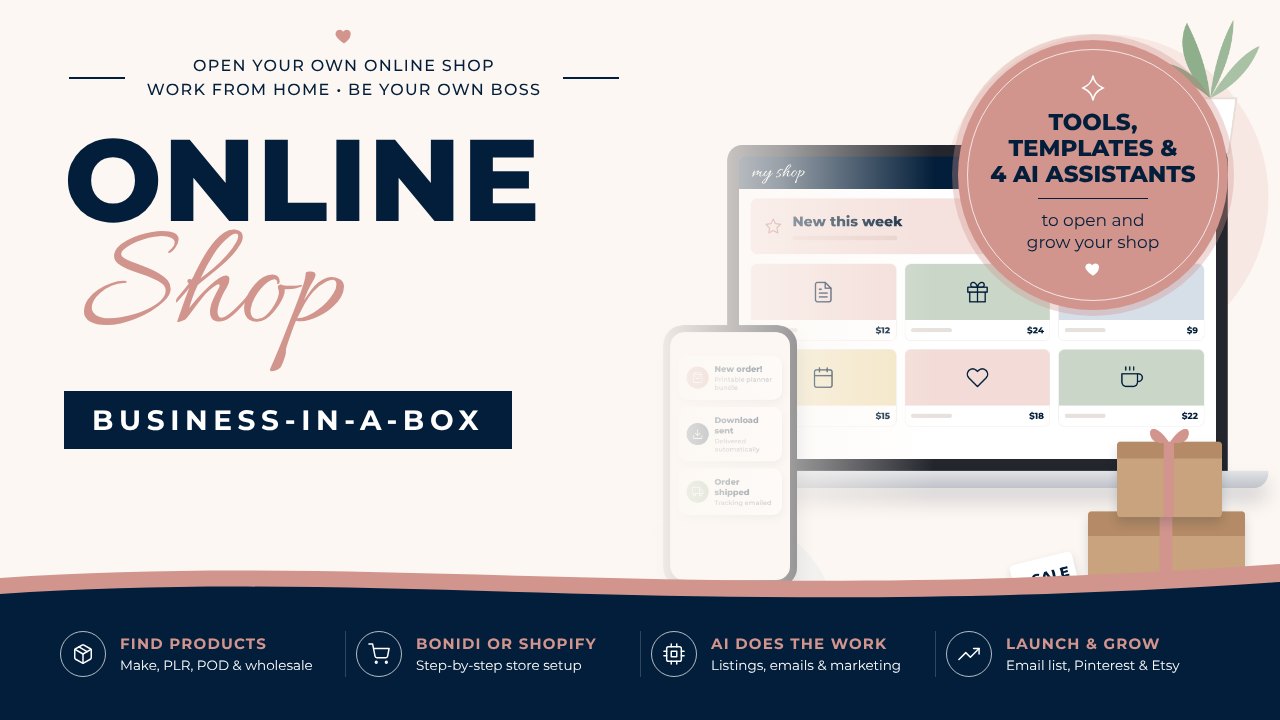
Build an online shop that earns, on Etsy and beyond
Online Shop Business-in-a-Box shows you how to pick products, set up your store in Bonidi or Shopify, sell on Etsy too, and launch, with templates and AI assistants for every step.
Making money on Etsy FAQ
Can you really make money on Etsy as a beginner?
Yes. Many sellers start with no experience. The ones who earn treat it like a business: they pick a niche, build plenty of listings, price for profit and keep improving based on their stats.
How long does it take to make money on Etsy?
Some shops get a sale in the first week, while others take a couple of months. Building income usually takes a few months of steady listing and promotion.
What is the easiest thing to sell on Etsy to make money?
Digital products like printables and templates are the easiest start for most moms, because there’s no inventory or shipping and Etsy delivers the files automatically.
How many listings do I need to make money on Etsy?
There’s no fixed number, but more good listings mean more chances to be found. Aim for 30 or more within your first few months, all in the same niche.
Do I have to pay taxes on Etsy income?
In most places, yes. Rules depend on where you live and how much you earn, so check your local rules and talk to a tax professional.
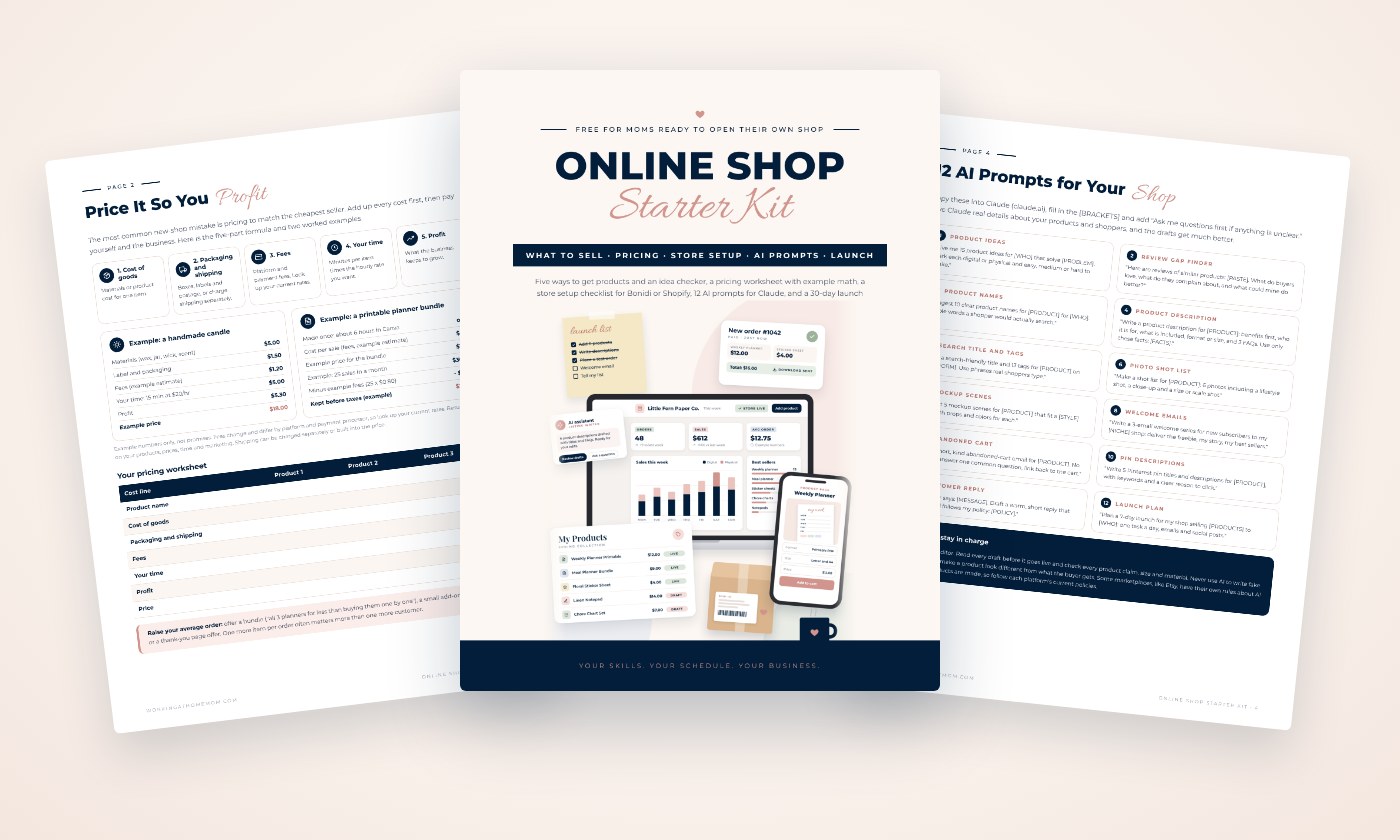
Plan, price and launch your shop
Five ways to get products, a pricing worksheet with example math, a store setup checklist for Bonidi or Shopify, 12 AI prompts and a 30-day launch plan. Sent straight to your inbox.