Figuring out how to price printables is one of the hardest parts of starting a printables shop. Price too low and you work hard for very little. Price too high without showing the value, and buyers scroll right past.
The good news: you don’t need a perfect price on day one. You need a sensible starting point, a clear idea of your costs, and the confidence to adjust as you learn. In this guide we walk you through exactly that.
How to price printables: the quick answer
- Start with the value your printable gives the buyer, not the minutes it took you.
- Research similar printables to see the normal price range in your niche.
- Account for platform fees, payment fees, taxes and your tools.
- Pick a price that leaves you a real profit after those costs.
- Offer bundles to raise the value of each order.
- Use discounts on purpose, not out of panic.
- Review prices regularly and raise them as your shop grows.
Think value first, not time
It’s easy to think, “This only took me an hour, so it should be cheap.” But buyers don’t pay for your time. They pay for the result: a calmer week, a party that’s ready to go, or a budget they finally understand.
Ask yourself:
- What problem does it solve? A wedding planning kit that saves hours of stress is worth more than a single decorative page.
- How often will they use it? A planner used every day for a year has more value than a one-time game.
- Who is buying? Business owners and teachers often expect to pay more for tools that save them time at work.
- What’s included? More useful pages, multiple sizes, instructions and examples all add value.
Tip: describe the outcome in your listing, not just the pages. “Plan a week of family dinners in 15 minutes” sells the value better than “1-page meal planner.”
Research similar printables
Before you set a price, look at what buyers already see. Search your product on Etsy and on other sellers’ stores, and make notes on:
- The price range: what’s the low end, the middle and the high end for this type of printable?
- What’s included at each price: page count, sizes, editable versions, bonuses.
- Reviews: which listings have lots of happy buyers, and at what prices?
- Presentation: higher-priced listings often have better mockups, clearer descriptions and stronger branding.
Use this to place your product, not to copy anyone. If your printable is more detailed, better designed or more targeted, it can sit at the middle or upper end of the range. Racing to the bottom with the lowest price rarely pays off.
Do it with AI: after you research, paste your notes into Claude (or ChatGPT): “I sell a printable [PRODUCT] for [WHO IT’S FOR]. Here are similar listings I found, with what each includes and its price: [PASTE NOTES]. Based on what mine includes, [WHAT’S INCLUDED], suggest where it should sit in this range and 3 ways I could add value to justify a higher price.” Then check the reasoning yourself and choose a price you’re comfortable with.
Account for fees and costs
Your price is not your profit. Before you settle on a number, list every cost that comes out of each sale or each month. Typical ones include:
- Platform fees: marketplaces like Etsy charge listing fees and fees when an item sells.
- Payment processing fees: charged on each payment, whether you sell on a marketplace or your own store.
- Store or software subscriptions: your website platform, design tools like Canva, and any other apps.
- Advertising: if you run ads, include that cost too.
- Licenses: fonts, graphics or PLR content you paid for.
- Taxes: income tax and, depending on where you and your buyers are, sales tax or VAT.
Fees and rules change and vary by country, so check each platform’s current pricing pages rather than relying on old numbers. For taxes, check your local rules or talk to a professional.
Example price math
Here’s a simple way to see what you actually keep. The numbers below are made up for the example only. Use your own costs and each platform’s current fees.
Example: a single printable
- Price: $8.00
- Example fees on that sale (listing, transaction and payment): $1.50
- Left after fees: $6.50
If your monthly tools cost $30 in this example, you’d need about five sales a month just to cover them. Every sale after that is profit (before taxes).
Example: a bundle
- Bundle price: $18.00 for four printables
- Example fees on that sale: $2.50
- Left after fees: $15.50
In this example, one bundle sale brings in more than two single sales, and you only did the work of one order. That’s why bundles are so useful.
Tip: build a simple pricing sheet in Google Sheets with columns for price, estimated fees, your monthly costs and what’s left. Update it whenever fees or your costs change.
Use bundles to increase value
Bundles let buyers get more for their money while you earn more per order. A few ways to build them:
- Complete kits: a meal planner, grocery list, pantry inventory and recipe cards together.
- Theme sets: every printable a buyer needs for a baby shower or holiday.
- Good, better, best: a single page, a small set, and a full bundle at three price points.
- Bonus pages: add an extra page or two that’s only in the bundle.
Price the bundle below the cost of buying everything separately so the deal is obvious, but not so low that it undercuts your single items.
Discounts and sales
Sales can bring in new buyers, but constant discounts teach people to wait. Use them with a plan:
- Launch offers: a short discount for a new product can help you get first sales and reviews.
- Seasonal sales: holiday shopping periods and back-to-school are natural times to run a sale.
- Email subscriber deals: reward your list with an exclusive code.
- Thank-you coupons: a small discount for repeat buyers encourages them to come back.
Always run your price math on the discounted price, too. Make sure a sale still leaves you a profit after fees.
When and how to raise your prices
Many sellers start low and never revisit their prices. Review yours every few months. Signs it may be time to raise them:
- Steady sales and good reviews: buyers clearly see the value.
- You’ve improved the product: new pages, better design, extra sizes or bonuses.
- Your costs went up: fees, tools or licenses cost more than before.
- Your shop looks established: more listings and reviews build trust.
Raise prices in small steps, on one or two products at a time, and watch what happens. If sales hold steady, you’ve found room to grow. If they drop sharply, you can adjust again or add value.
Pricing on Etsy vs your own store
Your costs are different in each place, so your prices can be too. A marketplace like Etsy brings you shoppers but takes fees on each sale. Your own store, on a platform like Bonidi or Shopify, usually means a monthly subscription and payment fees, but you keep your customer list and set your own rules.
Some sellers keep prices the same everywhere for simplicity. Others offer bundles or exclusive bonuses on their own store to encourage buyers to shop there directly. Either way, run your price math separately for each place you sell.
Pricing mistakes to avoid
- Copying the cheapest seller: the lowest price in a search isn’t the price buyers expect, and it may not be profitable.
- Forgetting fees: a sale that barely covers fees isn’t really a win.
- Pricing everything the same: a one-page checklist and a 40-page planner shouldn’t cost the same.
- Hiding the value: if your listing doesn’t show what’s included, buyers can’t see why it’s worth the price.
- Never testing: small, careful changes teach you more than guessing once and leaving it forever.
Still building your products? See how to make printables to sell and our list of printable ideas to sell. Selling on Etsy? Our Etsy setup guide covers listings and fees in more detail.
Price, list and sell your printables with confidence
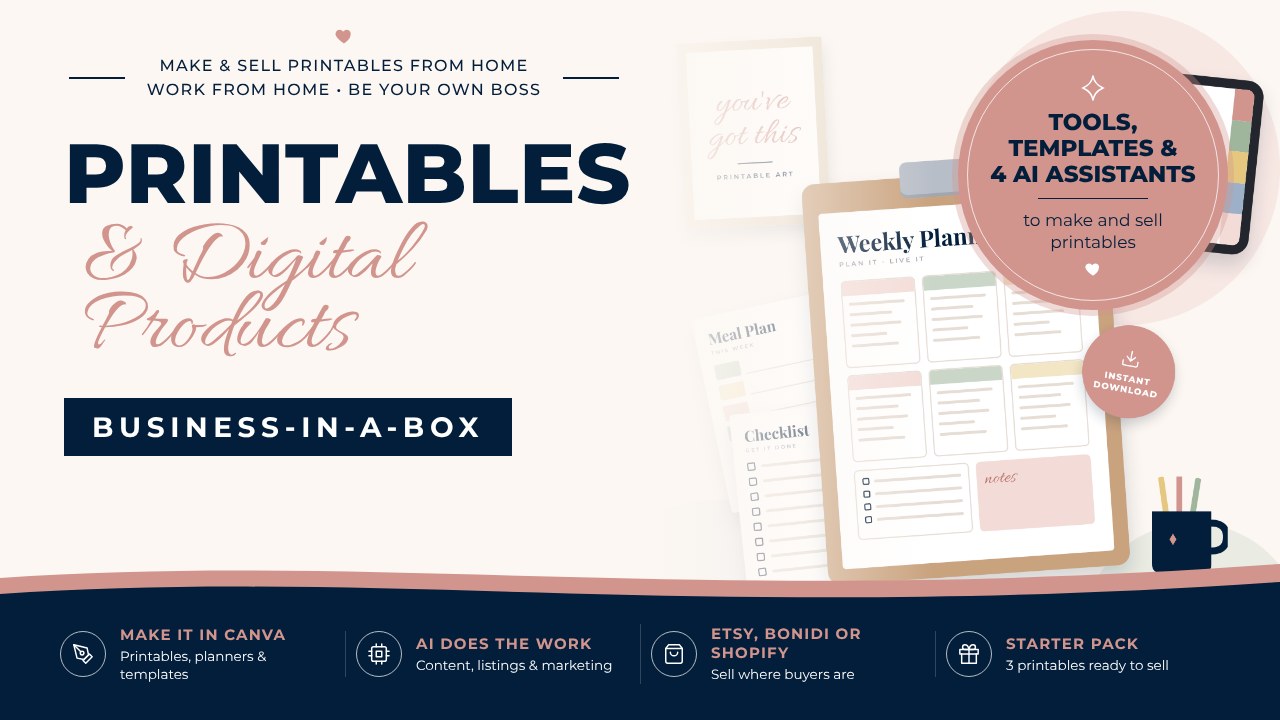
Our Printables & Digital Products Business-in-a-Box shows you how to make printables in Canva with AI and sell them on Etsy, Bonidi or Shopify. It includes 20 templates, 4 AI assistants and 3 ready-made printables to rebrand and sell.
Pricing printables FAQ
What is a good price for a printable?
There’s no single right price. It depends on your niche, what’s included and how well you present it. Research similar items, make sure you profit after fees, and adjust based on how buyers respond.
Should I price my printables low to get sales?
A small launch discount can help, but very low prices make it hard to profit and can make buyers question quality. It’s usually better to add value and show it clearly.
Should editable templates cost more than printables?
Often, yes. Editable templates save buyers more time and can be customized, so many sellers price them higher than a flat PDF. Check your design tool’s license rules for selling editable templates.
Do I need to charge sales tax on printables?
It depends on where you and your buyers are. Some marketplaces collect certain taxes for you, but rules vary. Check your local rules or talk to a tax professional.
How often should I change my printable prices?
Review prices every few months, or whenever your costs or product change. Make small changes and watch your sales before changing again.
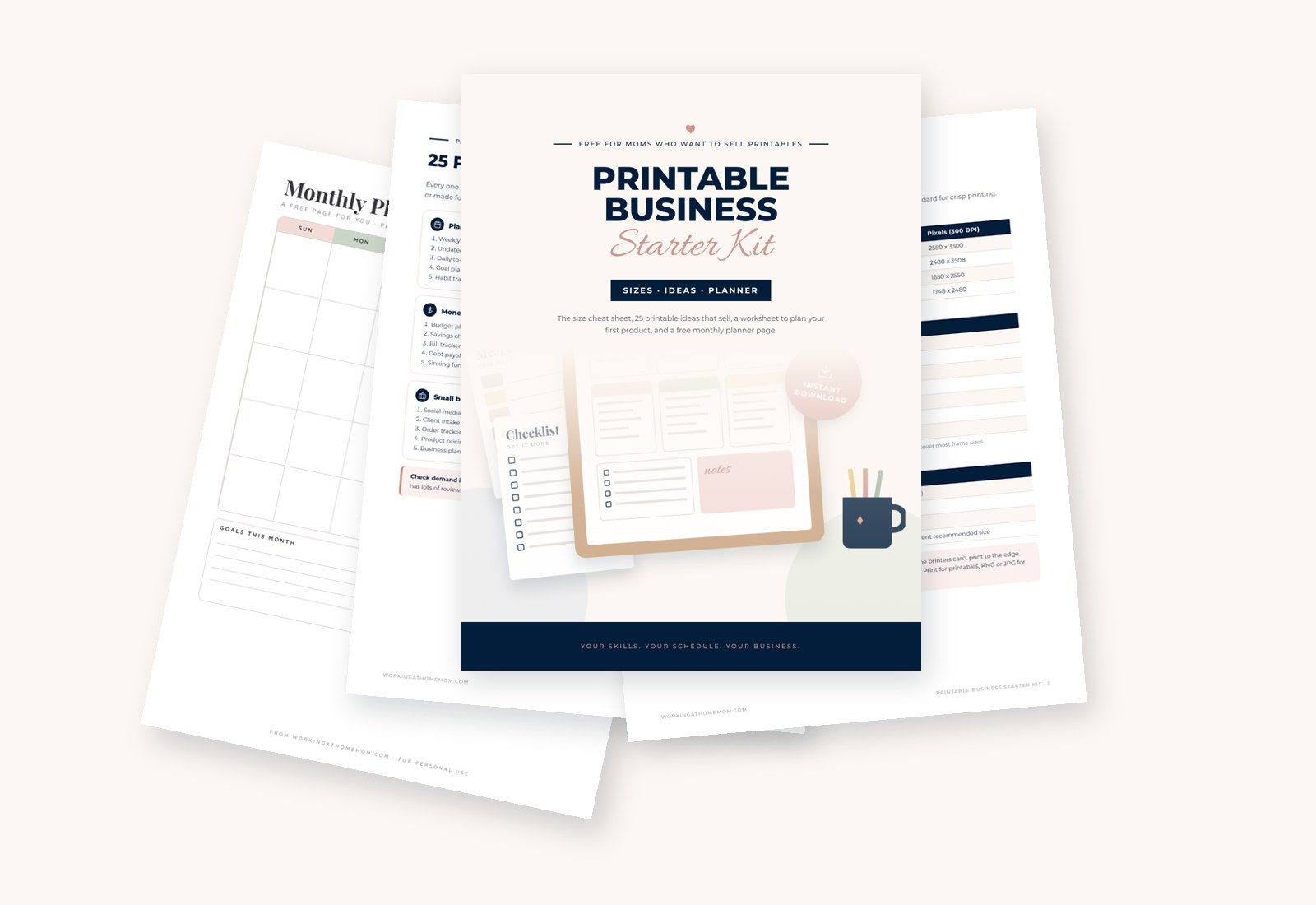
Get our free Printable Business Starter Kit
The printable size cheat sheet, 25 printable ideas that sell, a worksheet to plan your first product and a free monthly planner page. Sent straight to your inbox.