What is PLR? PLR stands for private label rights. It’s content someone else created (like planners, ebooks, graphics or worksheets) that you buy with permission to edit, put your own brand on, and often sell as your own product.
For busy moms, PLR can be a real shortcut. Instead of starting from a blank page, you start from a solid draft and spend your time making it better. But PLR comes with rules, and using it the wrong way can get you into trouble.
In this guide we explain how PLR works, what licenses usually allow, how to rebrand it properly, the pros and cons, red flags to watch for, and where to find it.
What is PLR? The quick answer
- PLR means private label rights: you buy content with the right to edit and brand it.
- It’s a starting point: most licenses let you change the content and sell or share the result.
- Every license is different: always read what’s allowed and what isn’t.
- Rebrand it properly: the more you customize, the more valuable and unique your product becomes.
- Check platform rules: marketplaces like Etsy have their own standards for what you can sell.
How PLR works
A PLR creator makes a product once, then sells the rights to use it to many buyers. Each buyer gets the files (often editable Canva links, Word documents or PDFs) plus a license that spells out what they can do.
Because many people buy the same PLR, the original content isn’t exclusive. That’s why the real value comes from what you do with it: your edits, your design, your audience and your expertise.
Common types of PLR
- Printables and planners: worksheets, trackers, journals and planner pages.
- Graphics and art: illustrations, backgrounds and design elements for products.
- Ebooks and guides: written content you can edit into your own book or lead magnet.
- Courses and workbooks: lessons, slides and exercises.
- Social media and email content: captions, post templates and email sequences.
PLR vs resell rights vs commercial use
These terms get mixed up a lot. Here’s the general difference, but always go by the actual license you buy:
- Private label rights (PLR): you can usually edit the content, put your name on it and use or sell it as your own product.
- Resell rights: you can sell the product as-is, usually without changing it or claiming authorship.
- Master resell rights (MRR): you can sell the product and also pass on resell rights to your buyers.
- Commercial use: you can use the content (often graphics) inside products you sell, but not sell the content itself on its own.
What PLR licenses usually allow and forbid
Every PLR seller writes their own terms, so read each license carefully. That said, here’s what many licenses have in common.
Usually allowed
- Editing: changing text, colors, fonts, layout and images.
- Branding: adding your name, logo and website.
- Selling the finished product: often as a printable or digital download.
- Giving it away: as a freebie or lead magnet to grow your email list.
- Breaking it up: using parts in blog posts, emails or bundles.
Usually not allowed
- Reselling it unchanged: passing on the original files as-is, especially with PLR rights attached.
- Sharing the source files: handing out the editable versions to others.
- Selling the rights: unless the license specifically allows it.
- Using it in certain places: some licenses limit marketplaces, print-on-demand or physical products.
Tip: save a copy of every license with your files, in one folder per purchase. If a question ever comes up, you’ll have proof of what you’re allowed to do.
Can you sell PLR on Etsy?
Be careful here. Etsy’s Creativity Standards say digital items must be original content designed by the seller, and they exclude things like a bundle or PDF of someone else’s work. Reselling PLR as-is is very unlikely to meet those standards.
If you use PLR as raw material and transform it into a clearly original product of your own, you’re on much firmer ground, but Etsy’s rules are what count. Read Etsy’s current policies before listing anything that started as PLR. Your own store, on a platform like Bonidi or Shopify, gives you more flexibility, as long as you follow the PLR license.
PLR ebooks, guides and instructions need extra care. Since October 2026, Etsy doesn’t allow AI-generated functional guides, such as how-to guides, instructions, patterns and recipes, and many PLR guides were written with AI. An AI rewrite doesn’t fix that. If you want to sell a guide on Etsy, rewrite the teaching yourself, from your own experience. Otherwise, sell PLR guides in your own store.
New to Etsy? Our guide to starting an Etsy shop covers the basics.
How to rebrand PLR properly
The goal is a product that feels like it came from you, not from a PLR pack. Here’s a simple process:
- Read the license first: know exactly what you can change and where you can sell it.
- Pick a specific buyer: decide who this version is for (for example, homeschool moms or new teachers).
- Rewrite the words: change titles, prompts and instructions to match your voice and your buyer.
- Redesign the look: use your brand colors and fonts, change the layout, and add or remove pages.
- Add your own value: extra pages, a how-to-use guide, examples or bonus content only you could create.
- Give it a new name: a clear, searchable name that fits your shop.
- Test it: print it, use it, and fix anything that’s confusing.
Example: from PLR pack to your own product
Say you buy a PLR pack of 30 generic habit tracker pages. Instead of uploading them as-is, you pick a buyer (moms returning to work after maternity leave), keep the eight pages that fit, rewrite every prompt for that season of life, and redesign them in your shop’s colors and fonts.
Then you add three pages of your own: a morning routine planner, a pumping and childcare schedule, and a “first 90 days back” goal sheet. The result is a focused product with a clear audience, and it no longer looks like the 30 pages everyone else bought.
Do it with AI: paste your PLR text into Claude (or ChatGPT) with this prompt: “This is PLR content I have the rights to edit. Rewrite it for [WHO IT’S FOR] who want to [GOAL]. Use a warm, simple tone, change the structure where it helps, and suggest 3 extra pages or sections that would make it more useful for this audience. Also suggest 5 product names.” Then check the result, edit it in your own voice, and make sure everything is accurate.
Pros and cons of PLR
Pros
- Saves time: you start with a finished draft instead of a blank page.
- Lowers the barrier: great when you’re short on design skills or confidence.
- Helps you test ideas: try a niche quickly before creating everything from scratch.
- Fills gaps: add a bonus, freebie or bundle item without starting over.
Cons
- Not exclusive: other buyers have the same starting content.
- Quality varies: some PLR is excellent, some needs heavy editing.
- License limits: you’re bound by someone else’s rules.
- Platform risk: marketplaces may remove listings that aren’t clearly original.
Red flags when buying PLR
- No written license: if you can’t read the terms, don’t buy.
- Vague or contradictory rules: a license should be clear about what you can sell and where.
- Characters or brands: PLR featuring cartoon characters, logos or trademarked names is a problem no license can fix.
- Unclear sources: if the seller can’t say where images or fonts came from, you can’t be sure you have the rights.
- Income promises: be wary of anyone promising you’ll make a certain amount from their PLR.
- Too-good-to-be-true bundles: giant packs for very little money are often low quality or resold without permission.
Where to get PLR
Look for PLR shops that specialize in your niche, have clear licenses and show real examples of their content. Membership-style clubs can be good value if you’ll use new content regularly.
One option for printable and planner sellers is That PLR Shop’s club, which offers monthly art and graphics with commercial and PLR use, plus training on turning them into products. (Affiliate link: we may earn a commission at no extra cost to you.) As with any PLR, check the current license: their terms say you can’t resell the images as-is, so plan to build them into your own designs.
Want to compare PLR to other easy products? See our list of easy digital products moms can sell, and our guide on how to make printables to sell from scratch.
Rebrand and sell printables the right way
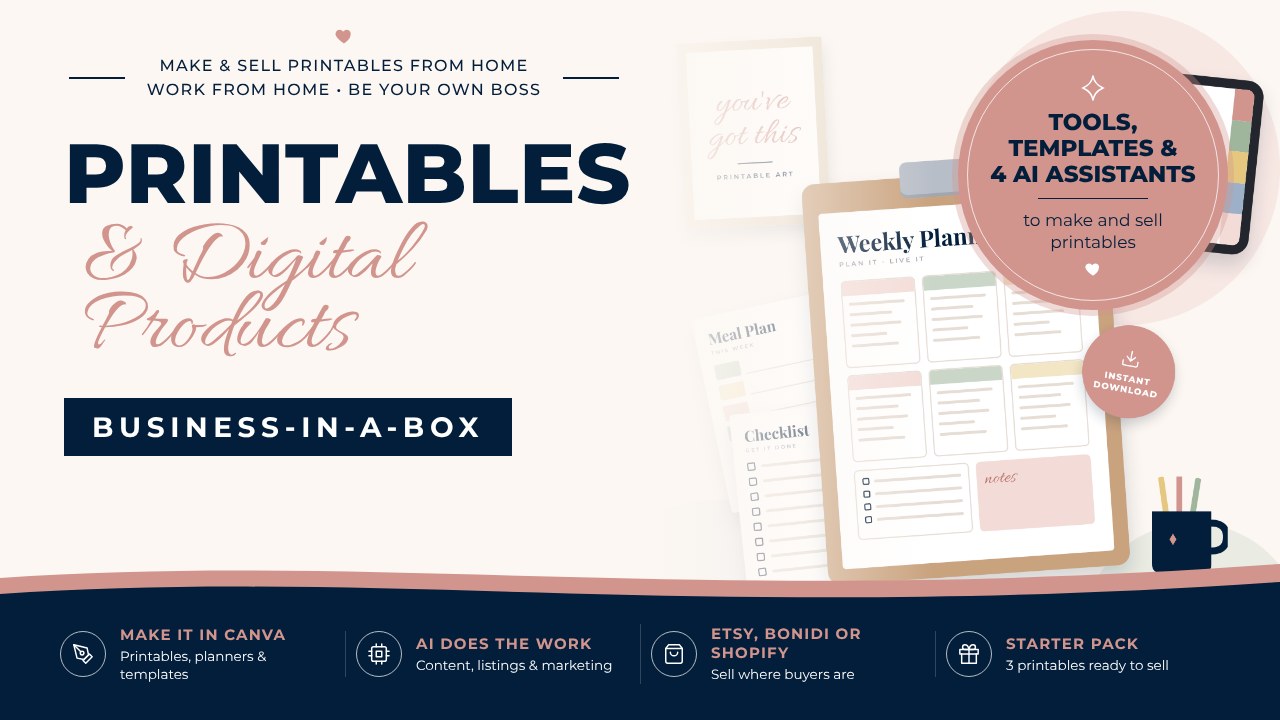
Our Printables & Digital Products Business-in-a-Box shows you how to make printables in Canva with AI and sell them on Etsy, Bonidi or Shopify. It includes 20 templates, 4 AI assistants and 3 ready-made printables you can rebrand and sell.
PLR FAQ
Is PLR legal?
Yes, when you follow the license. PLR is sold with permission to use and edit the content. Problems come from breaking the license terms or selling PLR somewhere its rules don’t allow.
Can I put my name on PLR content?
Most PLR licenses allow you to brand the content as your own. Check your specific license to be sure.
Is PLR content bad for SEO?
Publishing PLR text unchanged can mean the same words appear on many websites, which doesn’t help you stand out. Rewriting it in your own words and adding your own insight makes it far more useful.
What’s the difference between PLR and MRR?
PLR usually lets you edit and brand the content. MRR (master resell rights) usually lets you resell the product and pass on resell rights, often without editing. Always go by the license you buy.
Do I need to tell customers I used PLR?
Licenses usually don’t require it, but platform rules may require certain disclosures. For example, Etsy requires sellers to disclose when items are made with AI, which can apply to some PLR graphics and text. Check the rules where you sell.
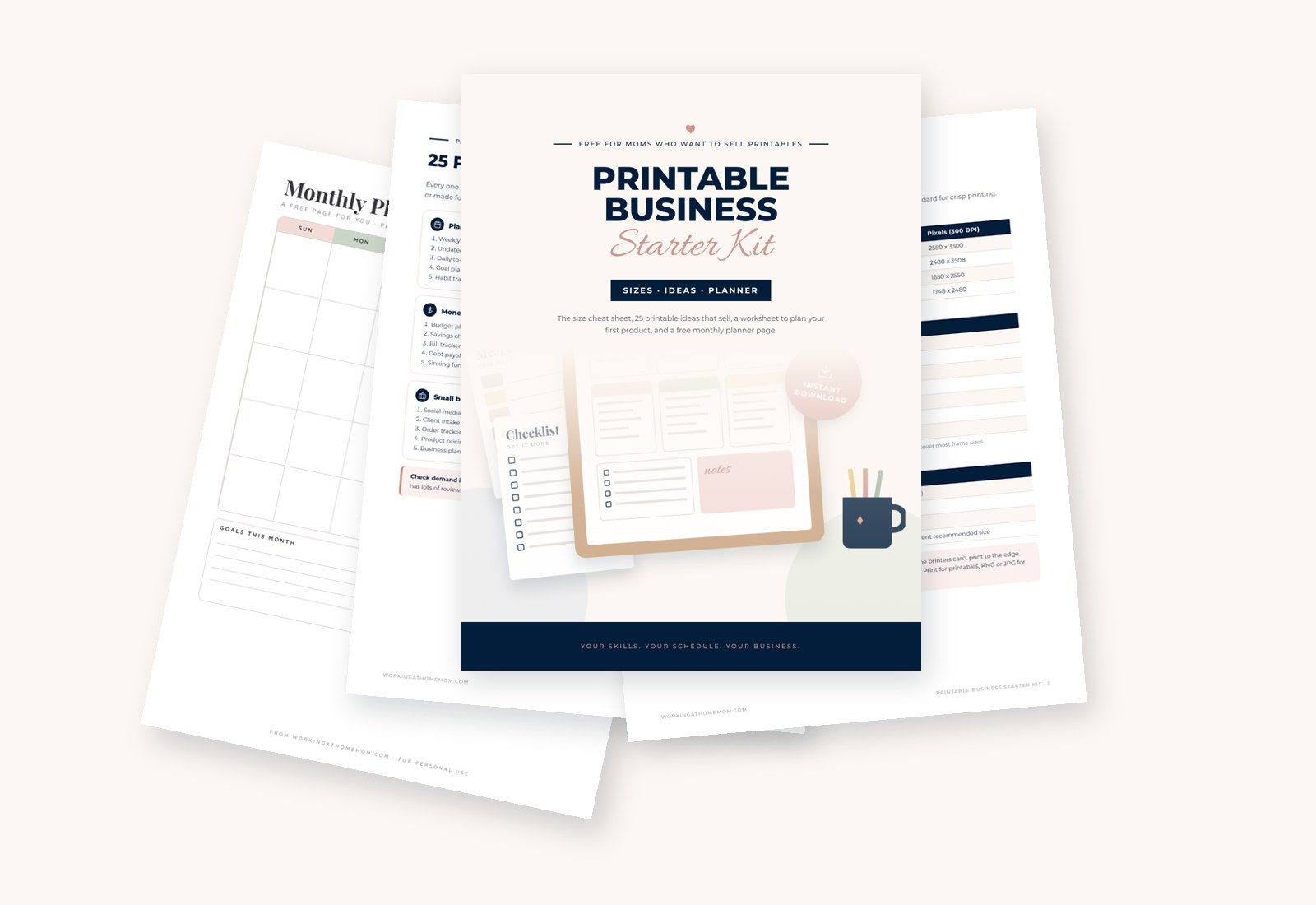
Get our free Printable Business Starter Kit
The printable size cheat sheet, 25 printable ideas that sell, a worksheet to plan your first product and a free monthly planner page. Sent straight to your inbox.